Physical Address
304 North Cardinal St.
Dorchester Center, MA 02124
Physical Address
304 North Cardinal St.
Dorchester Center, MA 02124

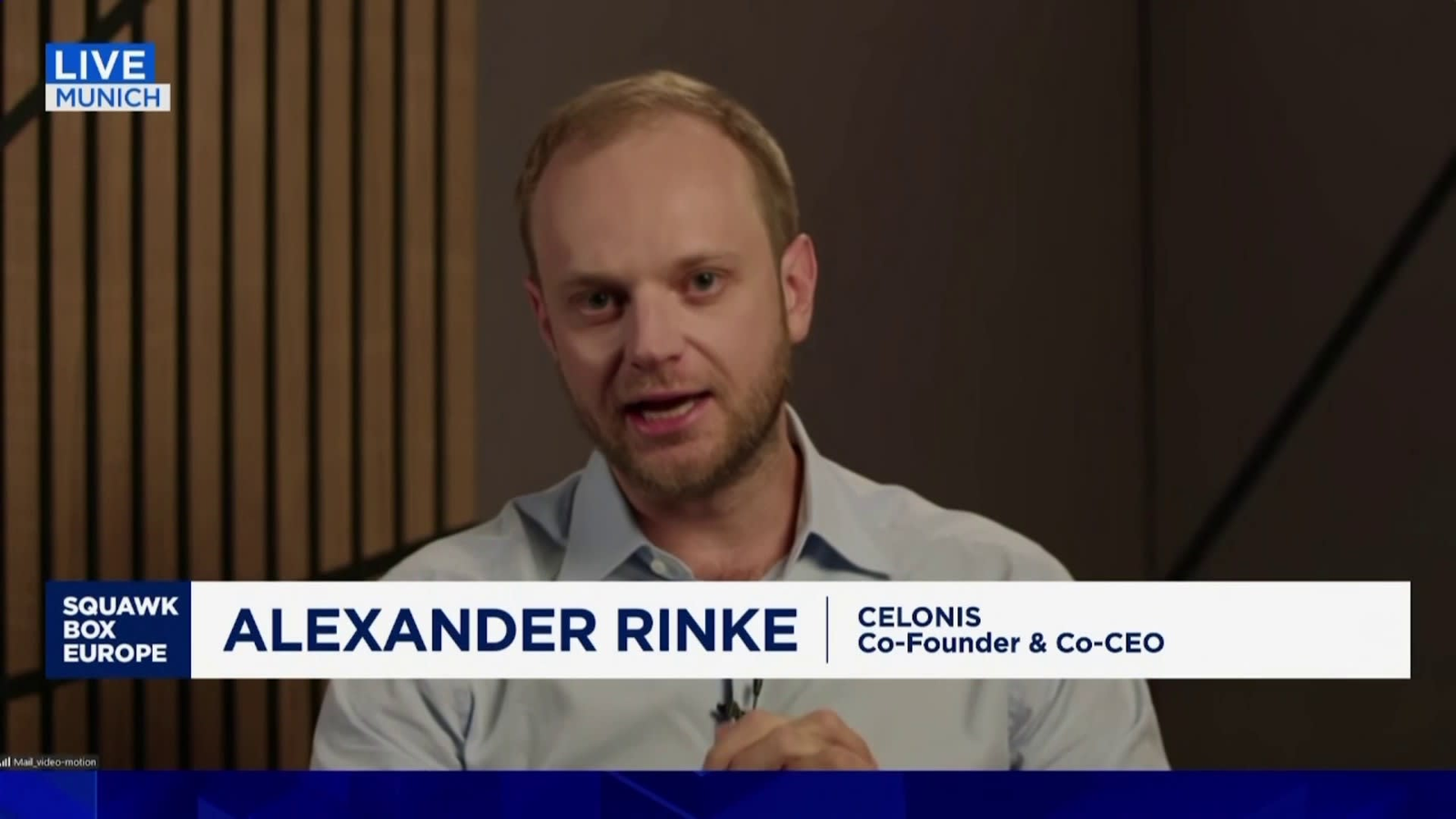
Celonis CEO Alex Rinke said it plainly; "There's no AI without PI." The organizations getting value from AI agents all started the same way; by understanding their processes before automating them.
Celonis CEO Alex Rinke made a statement at Celosphere 2025 that keeps bouncing around enterprise strategy conversations. “There’s no AI without PI.” PI being process intelligence; the discipline of understanding how work actually flows through an organization before you try to automate it.
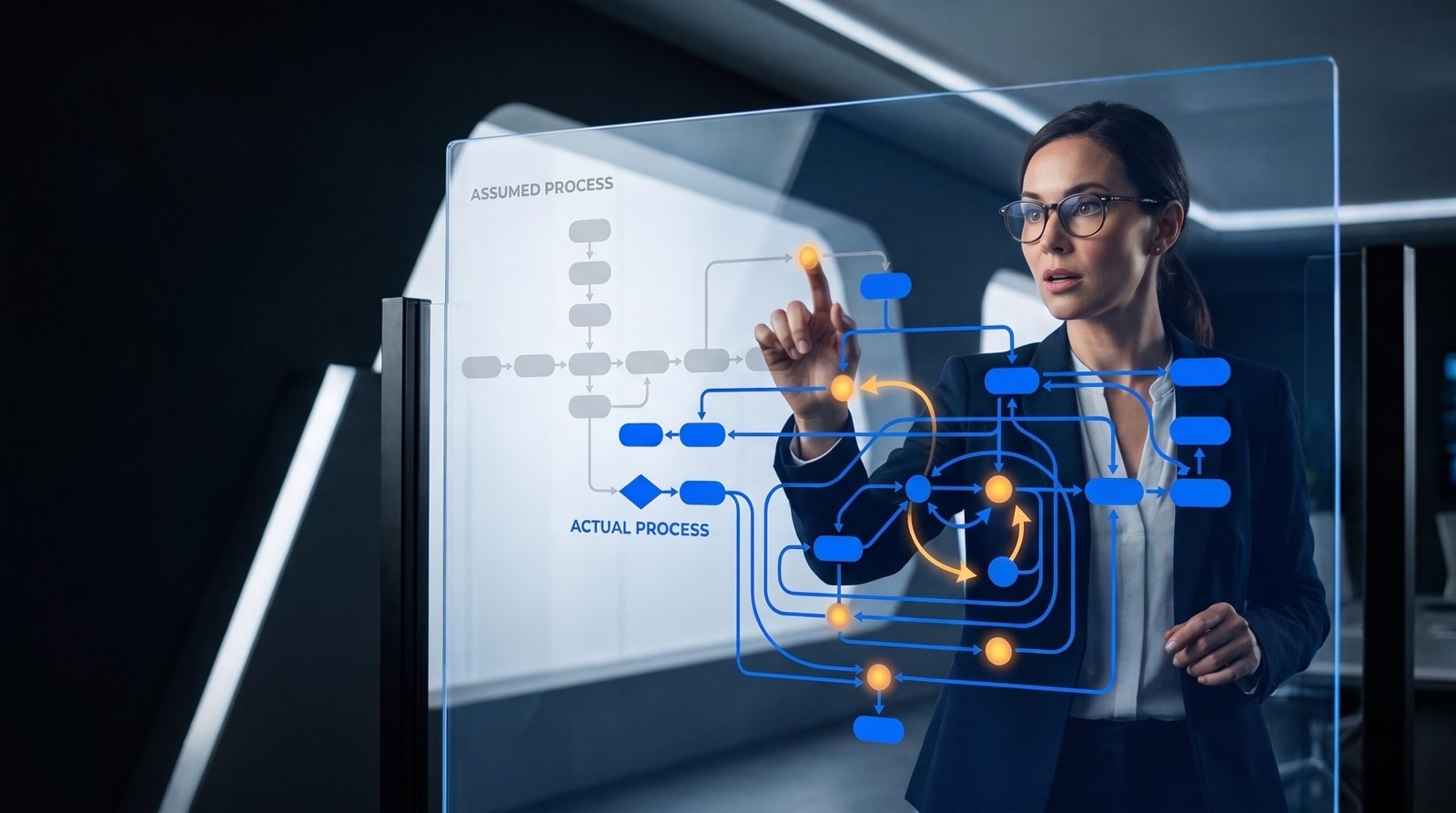
Bold claim from a process mining CEO, right? Except the data backs it up in ways that are hard to argue with.
McKinsey research estimates that organizations lose between 20% and 30% of annual revenue to process inefficiencies they cannot see. Not inefficiencies they know about and tolerate. Inefficiencies they do not know exist. Hidden handoffs, redundant approvals, bottlenecks buried inside workflows that look fine on a process map but behave differently in practice.
Now add AI agents to those invisible broken processes. What do you get?
Faster broken processes.
Here is a pattern I think about a lot. A procurement team assumes vendor approvals are slow because vendors submit incomplete documents. So they deploy an AI agent to chase vendors for missing paperwork, auto-validate submissions, and route completed applications to the next step.
The agent works perfectly. Documents get validated faster. Routing happens automatically. The team celebrates.
But the actual bottleneck, as one CflowApps case study revealed, was that legal review was being triggered for every single vendor, regardless of risk level. Low-risk vendors (the ones ordering $500 of office supplies) were queuing behind high-stakes contract reviews. The AI agent sped up everything before the bottleneck and nothing after it.
This is the automation-before-understanding problem. It is probably the most expensive mistake in enterprise AI right now. And I will be honest; I have seen smart teams make it. It is easy to do because the process map says one thing and reality says another.
Process intelligence is the tool that shows you reality.
If you have not worked with process mining tools before, here is the short version. They connect to your existing enterprise systems (ERP, CRM, ITSM, whatever generates event logs) and reconstruct how work actually moves through the organization. Not the theoretical workflow. Not the process diagram on the SharePoint site that nobody has updated since 2019. The real thing.
The gap between the two is usually shocking. Deloitte research found that 63% of organizations reported process intelligence software helped them discover automation use cases they did not know existed. That is a polite way of saying most organizations do not understand their own workflows well enough to automate them intelligently.
What the mining reveals falls into three categories;
Invisible bottlenecks. Steps that take 10x longer than anyone assumed because the work sits in a queue nobody monitors. Redundant approvals. Four people sign off on something that one person could authorize. Variant explosion. The “standard” process has 47 different paths through it, and only 3 of them account for 80% of volume.
We covered the broader readiness question in AI Adoption: A Guide to Assessing Organizational Readiness; process maturity is one of the ten dimensions that determines whether your AI investments produce results or produce confusion. If you want to score yourself across all ten, the AI Readiness Assessment Matrix walks you through it with clear rubrics. Free download, about two hours to complete.
Something significant shifted in 2025-2026. Process mining vendors and AI agent vendors started merging capabilities. Celonis launched Agent Mining and its Orchestration Engine at Celosphere 2025. ServiceNow integrated process and task mining directly into its AI agent workflows. Apromore partnered with Salesforce’s Agentforce platform.
Why now?
Because agentic AI hit a wall. Gartner estimates that 80% of enterprise applications shipped in Q1 2026 embed at least one AI agent. The agent market is valued at $11 billion. But 88% of AI agent pilots never reach production.
The agents work fine in demos. They fail in production. And the most common reason is that they were deployed onto workflows nobody fully understood.
Process mining vendors realized their diagnostic insights only become valuable if the organization can act on them (hello, AI agents). AI agent vendors realized their tools cannot scale without knowing what to automate first (hello, process intelligence). The two fields need each other. That is why they are converging.
Kai Waehner’s 2026 analysis put it well; a process built for human execution is rarely the right foundation for an autonomous one. The step before automation is redesign. The step before redesign is understanding. Process intelligence provides the understanding.
This is the uncomfortable part. Mining your processes reveals the mess. Redesigning them requires organizational change. New approval chains. Eliminated steps. Redrawn responsibilities. People do not love that.
But skipping the redesign is how you get fast, confident AI agents doing the wrong thing at scale. Organizations that skip redesign automate their inefficiencies at machine speed.
The redesign question is specific; if we were building this workflow from scratch for an AI agent to execute, what would it look like? That question almost always produces a different workflow than the one that currently exists. The human workflow has organic complexity: workarounds, exceptions, unofficial escalation paths. The agent workflow needs clean decision points, clear data inputs, and explicit rules for when to hand back to a human.
We wrote about how that transition from human-led to AI-led workflows actually plays out in Automation, Autonomy, & Adaptation. The key insight there is the same one that applies here; the transition is not binary. It is a spectrum, and each point on the spectrum requires a different workflow design.
For teams ready to think through the full operating model (not just the process layer, but strategy, governance, organization, talent, and performance measurement), the Enterprise AI Operating Model Blueprint provides the six-layer framework. The process layer sits right in the middle, which is exactly where it belongs; connecting strategy above to talent below. Also free.
The enterprises seeing real results from AI in 2026 share four operational patterns;
They sequence the investment. Process mining first. Redesign second. Agent deployment third. Not in parallel. In order. Each phase produces the input the next phase needs.
They treat process mining as ongoing, not one-time. Mining continues after agents are deployed. It becomes the observability layer that catches when agents drift, when process variants emerge, and when the workflow needs another redesign cycle.
They redesign before they automate. They ask “what should this workflow look like for an agent?” not “how do we add an agent to this workflow?” The difference sounds subtle. It is not.
They measure process outcomes, not agent activity. Cycle time, error rate, cost per unit. Not “number of agent invocations” or “tokens processed.” The results are striking; documented benefits include up to 27% reduction in downtime and 10-30% cost savings.
For teams navigating the broader maturity curve, the Maturity Based AI Roadmap lays out what to do at each stage. Process intelligence is what moves you from “Ready” to “Build” with confidence instead of guesswork.
A quick note for teams without Celonis-sized budgets (which is most teams, I suspect). You do not need an enterprise process mining platform to start thinking about process intelligence.
Start with the simplest version. Pick one process you plan to automate. Map every step as it actually happens; not from the process document, but by sitting with the people who do the work. Time each step. Count the variants. Identify where work queues, loops back, or disappears into email.
That exercise alone, which costs nothing,g; will tell you more about whether your AI deployment will succeed than any vendor demo will. It is not as thorough as automated process mining. But it gets you 80% of the way to the critical question:n; do we understand this workflow well enough to automate it?
If the answer is no, you just saved yourself months of building the wrong thing.
For practical AI application examples in a specific industry, BTO’s 100 Claude Prompts for Real Estate Agents shows what workflow-aware AI looks like in practice; every prompt is tied to a real task in a real process.
Rinke’s line sticks because it reframes the conversation. The question is not “which AI model should we use?” or “how many agents should we deploy?” or even “what is our AI strategy?”
The question is: do we understand how work actually flows through our organization? Can we point to the bottlenecks, the redundancies, the variants? Can we describe the workflow an agent would need to execute?
If yes, you are ready to deploy AI that produces results.
If no, you have your first project. And it is probably the most valuable one you will run this year.